
The Economic Power of Green Jobs in Nigeria
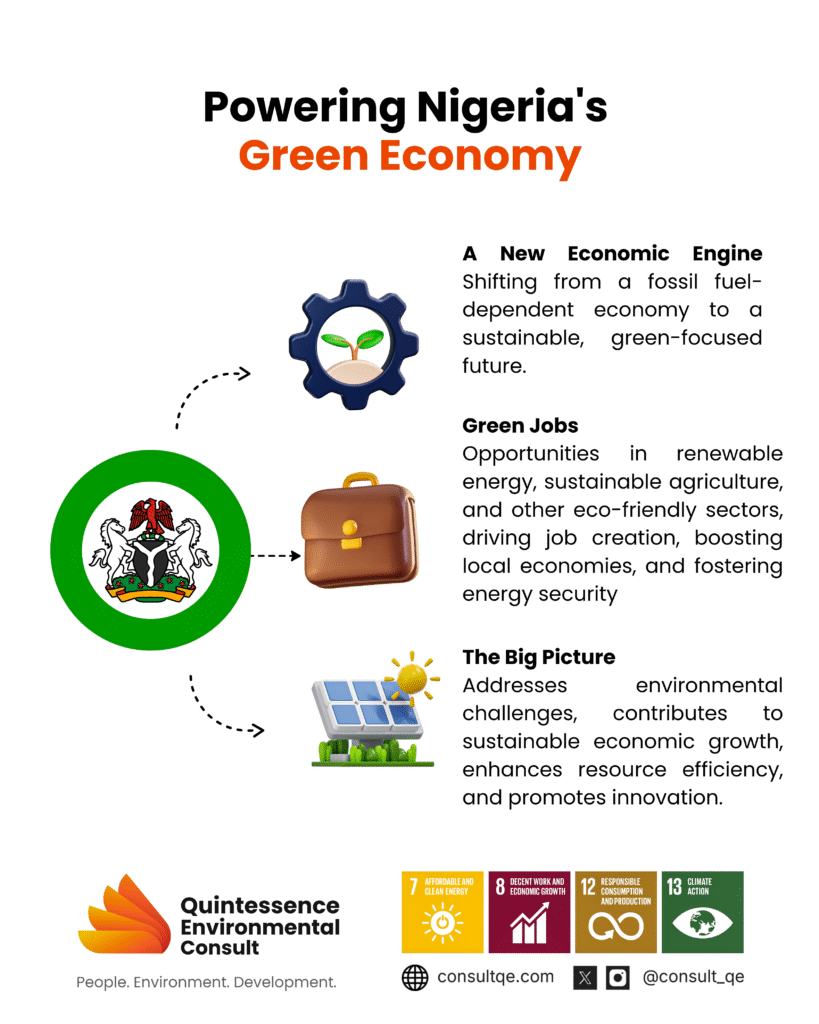
For decades, Nigeria’s economic narrative has been heavily reliant on the unstable nature of the oil market, as seen in the 2016 recession. (1) This dependency hinders the country’s capacity to develop other critical sectors, such as agriculture, manufacturing, and renewable energy. However, as the world shifts towards a sustainable future, transitioning to a green economy serves as an innovative pathway to enhancing the Nigerian economy. The transition to a green economy, a model that is low-carbon, resource-efficient, and socially inclusive, is not just about environmental protection; it is a strategic pathway to creating a new generation of employment opportunities known as green jobs.
Nigeria’s Strategic Transition to Cleaner Energy
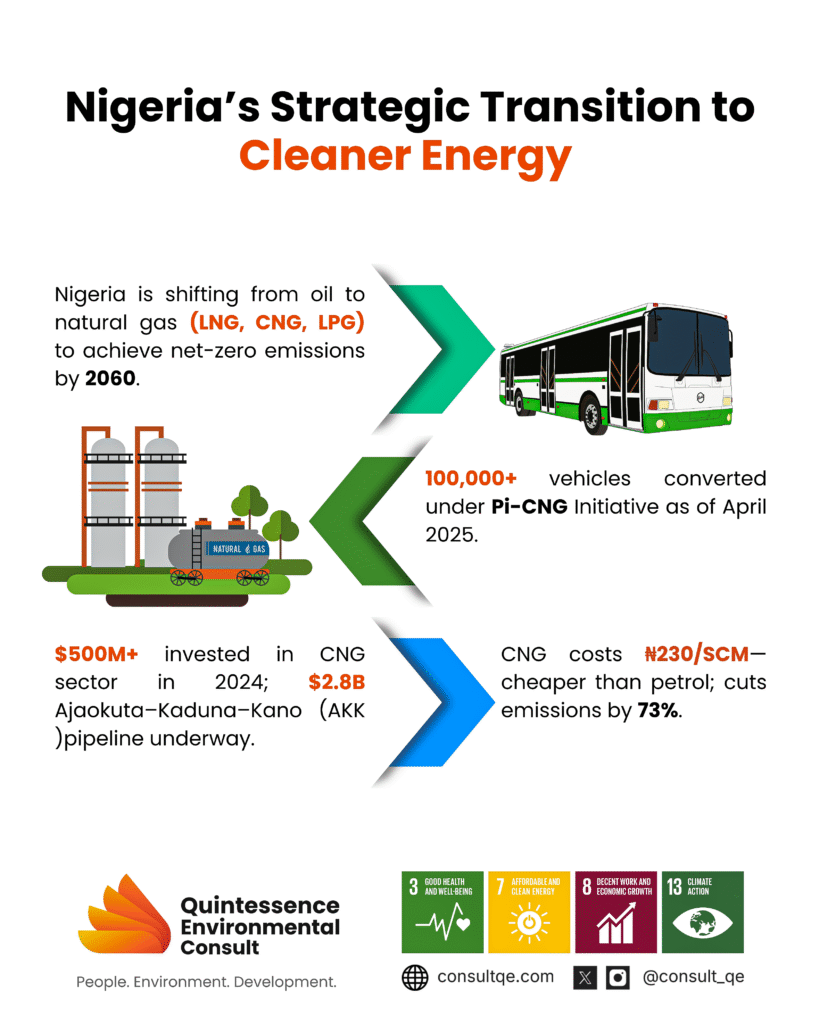
Nigeria bears the brunt of decades of severe environmental degradation due to its dependency on oil for fuel. Oil spills, a tragic and common occurrence stemming from pipeline vandalism, operational failures, or inadequate infrastructure, have wreaked havoc on ecosystems and shattered livelihoods. Beyond the immediate devastation, carbon emissions from oil-dependent infrastructure contribute significantly to global climate change. This immense environmental toll, compounded by persistent social unrest fueled by resource control disputes and perceived marginalization, underscores an urgent and undeniable need for a new direction. This blog delves into Nigeria’s vital shift towards a promising future fueled by cleaner and more sustainable energy sources.
Powering a Greener Tomorrow: Highlights from The DinSummit on Nigeria’s Sustainable Future
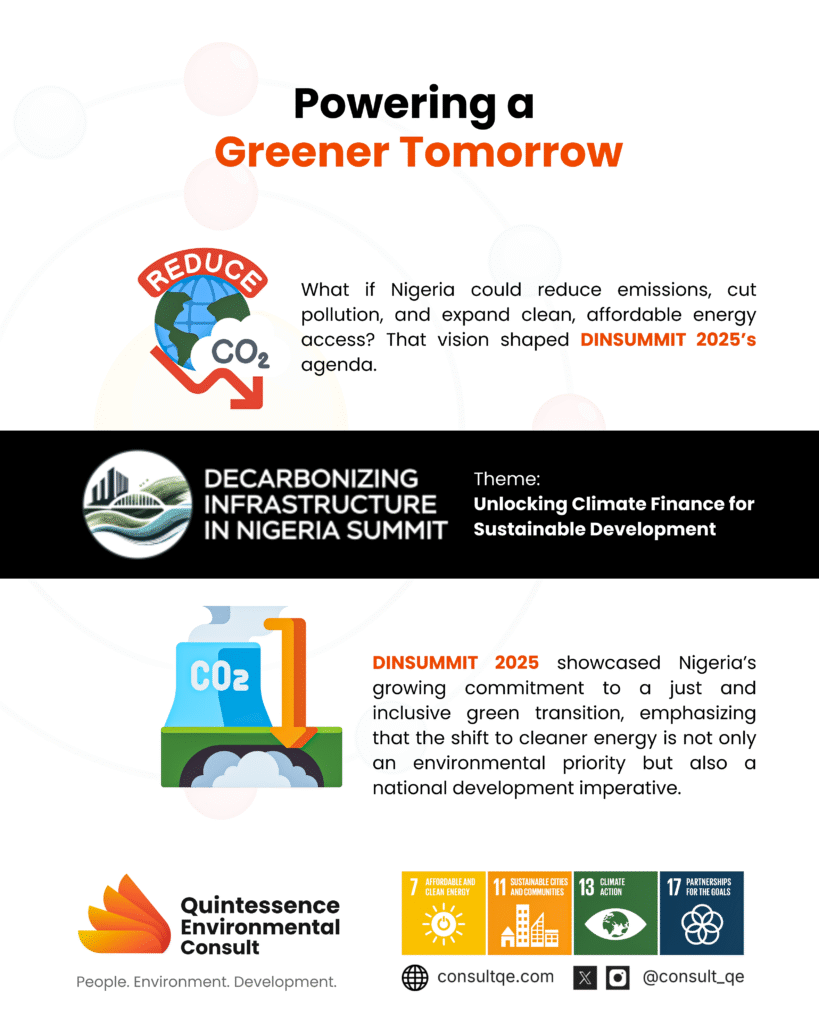
What if Nigeria could cut its carbon emissions, reduce air pollution, and expand clean energy access all at once? That bold vision took center stage at the 2025 Decarbonizing Infrastructure in Nigeria Summit (DINSUMMIT). With the theme “Unlocking Climate Finance for Sustainable Development,” the summit brought together key players from government, industry, and civil society to accelerate Nigeria’s transition away from carbon-intensive energy sources toward a sustainable, low-carbon economy.
For decades, Nigeria’s infrastructure has relied heavily on diesel and other fossil fuels to power construction, operations, and maintenance, especially in critical facilities like hospitals, schools, and government buildings. This dependency has led to high greenhouse gas (GHG) emissions, degraded air quality, and increased public health risks. To address this, the government, through the Office of the Vice President launched DINSUMMIT as a strategic response to the environmental and economic challenges posed by fossil fuel reliance.
Reimagining Katsina: A Green Growth Vision for All
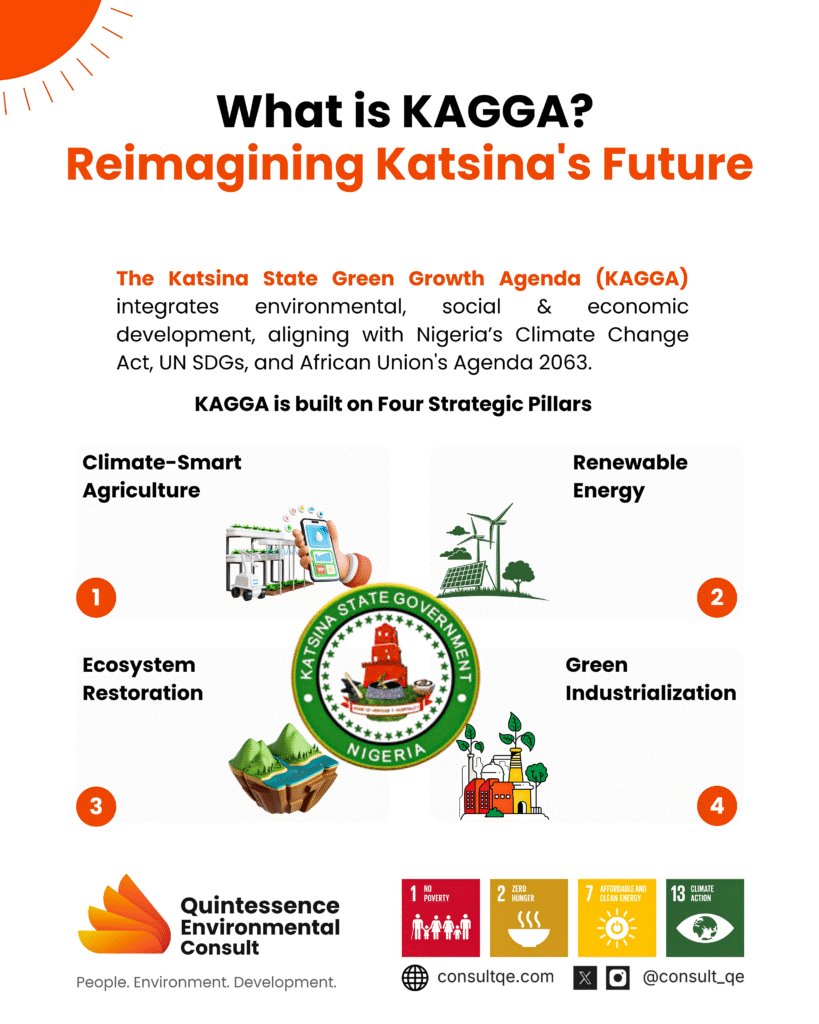
In an era defined by the need for sustainable development, Katsina State has taken a bold and strategic step forward. The Katsina Green Growth Agenda (KAGGA) is more than just a policy document, it is a transformative vision designed to align environmental resilience with economic growth.
ICT as a Catalyst for Climate Action: Turning Bytes into a Better Planet
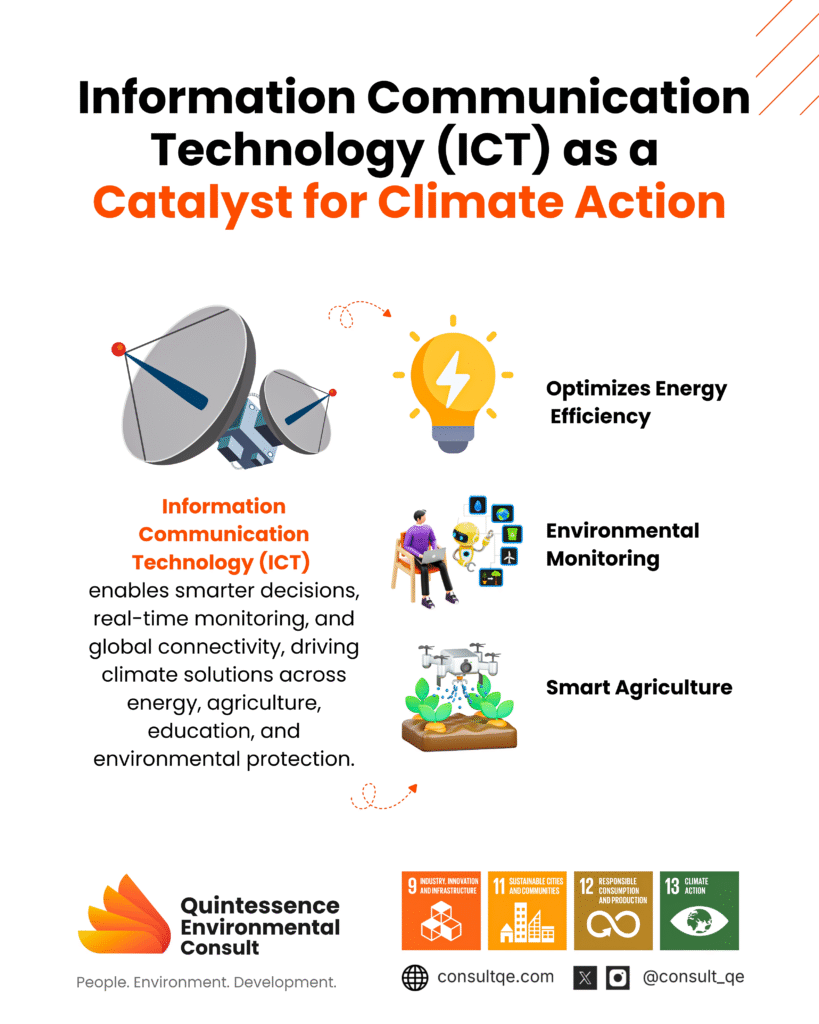
TAKEAWAY Technology fuels transformation: ICT is the catalyst behind innovations that are reshaping how we fight climate change across energy, agriculture, waste, and education. Real-time data saves real-world ecosystems: From satellites to sensors, ICT tools give us the intelligence we need to protect forests, track emissions, and predict disasters. Digital solutions are accelerating the green economy: Clean tech startups, green data centres, and digital agriculture are making sustainability profitable and scalable. ICT bridges the global climate knowledge gap: Online platforms are giving communities access to environmental data, resources, and training. The future of climate action is digital: As ICT continues to evolve, its potential to drive systemic climate solutions is just beginning. INTRODUCTION Can climate change be hacked? Not in the literal sense, but ICT is doing something close to it. From satellites mapping deforestation in real time to AI models predicting floods weeks in advance, technology is fast becoming our most powerful ally for climate change mitigation and adaptation. In a world where every second matters, ICT transforms awareness into action and data into decisions. It’s not just about fighting climate change, it’s about staying one step ahead. BACKGROUND Climate change is no longer a distant threat, it’s a present reality. Rising temperatures, shrinking glaciers, and increasingly violent storms are a wake-up call. The Intergovernmental Panel on Climate Change (IPCC) warns that we have until 2030 to cut global emissions in half or risk irreversible damage [1]. But while the threat looms large, a powerful solution lies in our hands in the form of mobile phones, internet access, and digital infrastructure. Information and Communication Technology (ICT) includes everything from software and sensors to broadband and blockchain. According to the Global e-Sustainability Initiative (GeSI), ICT has the potential to reduce global CO₂ emissions by 20% by 2030, even though the sector contributes only about 2-3% of emissions itself [2]. This is a leverage point: When deployed strategically, ICT is not just part of the solution; it amplifies the solution. Tracking Environmental Challenges, One Pixel at a Time Technology allows us to see what was once invisible. Satellite systems operated by the National Aeronautics and Space Administration (United States) (NASA), the European Space Agency (ESA), and private firms can now detect forest loss, melting ice caps, and methane (CH4) leaks from space. These are critical tools in shaping climate policy and enforcement. For instance, Global Forest Watch uses satellite data and Artificial Intelligence (AI) to monitor forests in real-time, alerting authorities of illegal logging within hours [3]. Meanwhile, the Environmental Insights Explorer by Google helps over 3,000 cities globally track building and transport emissions, helping mayors make data-driven climate decisions [4]. Without ICT, these insights would take months or never come at all. Smart Agriculture and Green Tech Agriculture, a major industry which emits greenhouse gases, is undergoing a digital revolution. ICT-powered tools such as precision farming, drone surveillance, and mobile weather forecasting are reducing input waste and increasing yields. In Kenya, applications like iCow and FarmDrive are helping smallholder farmers adapt to unpredictable weather by offering agricultural tips, weather updates, and access to microloans through mobile-based platforms. In India, sensors connected to the Internet of Things (IoT) are enabling farmers to control irrigation systems via SMS, conserving water while boosting food security. These solutions aren’t just reducing emissions, they are safeguarding our livelihoods and conserving the earth’s natural resources.. In the energy sector, smart grids are optimizing power distribution, cutting losses, and integrating renewables more efficiently. In fact, according to the International Energy Agency (IEA), smart energy systems powered by ICT could reduce electricity waste by up to 30% by 2030, aligning with global aligning with global climate goals[5]. Digital Empowerment and Education for Climate Climate literacy is no longer limited to scientists. Through mobile apps, virtual classrooms, and gamified learning platforms, ICT is making environmental education accessible and engaging. Applications like Earth Hero and Klima turn climate action into a personal mission, helping users calculate, reduce, and offset their carbon footprints. UN CC: Learn offers free online courses that have educated over 500,000 learners globally on climate resilience, green jobs, and adaptation strategies [6]. In vulnerable communities, ICT is also vital for early disaster warning systems. Text-based alerts on floods, wildfires, and storms have saved thousands of lives in countries like Bangladesh and the Philippines. That’s the power of a single byte in protecting entire populations. ICT and Circular Economy Innovation ICT is the backbone of the emerging circular economy, an economic model focused on designing out waste and keeping resources in use. Smart inventory systems, blockchain-powered product tracking, and mobile platforms for sharing or reusing goods are helping consumers and businesses close the loop. Companies like Too Good To Go, used widely in European countries such as Denmark, France, United Kingdom and Germany, help reduce food waste by using mobile applications that let consumers buy unsold food from restaurants, bakeries, and supermarkets at a discounted price; instead of throwing away perfectly good food at the end of the day. These businesses list it on the application, and users can reserve and pick it up at a lower cost. This way, food that would have gone to waste gets eaten, helping both the environment and people looking for affordable meals. Startup companies like Loop which launched in the United States, France and the United Kingdom, use digital platforms to manage reusable packaging systems, allowing consumers to return and reuse branded containers instead of relying on single-use packaging. Blockchain, in particular, is enabling transparency in carbon trading, e-waste recycling, and ethical sourcing [7]. These technologies make sustainability measurable, accountable, and profitable. Youth, Climate, and Digital Advocacy Young people are leading the digital charge for climate justice. Social media platforms have become megaphones for international movements like Fridays for Future and Stop Ecocide. With nothing more than a smartphone, youth activists from Africa to Asia are organizing protests, sharing climate stories, and pressuring world leaders into action [8]. Additionally, platforms like Youth Climate Lab and Connect4Climate use digital storytelling and